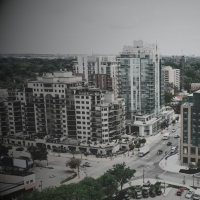
Burlington at a Glance
Burlington continues to hold a unique position within Southern Ontario's housing market. Buyers can reach Toronto, Hamilton, Niagara, and major employment corridors relatively easily, yet the city still feels noticeably calmer than many surrounding urban centres. That balance continues to attract households searching for practicality without sacrificing quality of life.
Unlike some Ontario markets that depend heavily on one buyer demographic, Burlington draws several at the same time. Young families continue to arrive for schools and larger homes, while downsizers often stay inside the city instead of relocating elsewhere. Professionals commuting a few days per week also continue to view Burlington as a workable middle ground between Toronto pricing and Hamilton density.[1]
One thing many market reports miss involves how long people tend to stay once they move here. In several established neighbourhoods, homes rarely change hands quickly. There are streets in areas like Roseland or Tyandaga can go years without multiple listings appearing. That creates an emotional layer to the market that statistics alone do not fully explain.
Limited land availability also continues to place pressure on future housing supply.[2]
Current Market Snapshot
The Burlington housing market in 2026 feels more measured than frantic. Buyers still compete for desirable properties, especially renovated detached homes in established areas, but fewer people rush into offers without careful financial calculations first.[3]
More listings have entered the market compared to the severe shortages seen during the pandemic years, although supply remains inconsistent depending on price range and property type.[4] Entry-level housing continues to attract strong activity, while higher-priced homes often face more negotiation and longer selling timelines.
One subtle shift has changed the tone of the market. Buyers now talk far more about monthly costs than headline purchase prices. Conversations that once focused mainly on “winning” a home now revolve around carrying expenses, future mortgage renewals, utility bills, and property taxes.
There is also a quieter issue affecting Burlington specifically: many homeowners simply do not want to leave. A large number locked into historically low mortgage rates several years ago. Selling today often means replacing those payments with significantly higher borrowing costs. Some owners would rather renovate a kitchen or finish a basement than re-enter the market altogether.
That hesitation continues to limit turnover in many older neighbourhoods.[4]
Detached Homes in Burlington
Detached homes continue to define the upper end of the Burlington market, although buyer expectations have changed noticeably since the rapid-growth years earlier in the decade.[5]
Purchasers now examine condition far more carefully than before. Homes with aging interiors, outdated mechanical systems, or unfinished renovations often face tougher scrutiny, particularly when borrowing costs already stretch monthly budgets.
Location inside Burlington matters just as much as square footage. Buyers consistently place stronger emphasis on school catchments, commuting convenience, traffic flow, and neighbourhood character. A smaller detached home near GO Transit or close to major highway access can outperform a much larger property farther from commuter routes.[6]
One overlooked trend involves renovation exhaustion. During highly competitive market periods, buyers accepted projects simply to secure a detached home. That mindset has faded. Contractors remain expensive, renovation timelines feel unpredictable, and many households no longer want the stress of major upgrades immediately after moving.
There is also a growing preference for functional space over formal layouts. Finished basements, home offices, mudrooms, and practical family living areas now matter more than oversized dining rooms that rarely see daily use.[6]
Townhomes and Semi-Detached Homes
Townhomes and semi-detached properties remain one of the busiest parts of the Burlington housing market in 2026.[7] These homes continue to attract buyers who need more room than a condo can provide but cannot comfortably justify detached-home pricing.
A large portion of demand now comes from buyers entering the market later in life than previous generations. Many already have children before purchasing their first property, which creates stronger demand for extra bedrooms, small backyards, garages, and flexible family space.
An interesting shift has also emerged around remote work. Buyers who commute only part of the week often prioritize interior usability over shaving a few minutes off highway travel time. A townhouse with a quiet basement office or separate family room can suddenly feel more appealing than a larger detached home with a less practical layout.
This segment also tends to react quickly to affordability pressure. Buyers compare monthly ownership costs very carefully, especially when condo fees, property taxes, and mortgage rates all move higher at the same time.[8]
Well-maintained townhomes near schools, grocery stores, and recreation facilities continue to attract strong attention because they solve practical everyday needs for growing households.
Condo Market in Burlington
Condominiums continue to occupy a larger role in the Burlington housing market, although the condo sector now behaves far less uniformly than many buyers expect.[9]
Purchasers pay much closer attention to building quality than they did several years ago. Maintenance fees, reserve fund strength, parking access, storage space, and long-term upkeep now influence decisions almost as heavily as unit size or location.
Affordability still drives much of the activity. Condo apartments remain one of the few remaining ownership options for buyers trying to enter Burlington without stretching into detached-home pricing. Downsizers also remain active, particularly near the waterfront and downtown core.[10]
One subtle change involves how buyers evaluate amenities. Flashy rooftop lounges and oversized party rooms no longer impress people the way they once did. Buyers increasingly care about practical daily convenience instead. Walkability, grocery access, pharmacy access, medical offices, and elevator reliability now carry real weight during property searches.
Older condo buildings have also started attracting renewed interest in some cases. Units with larger floorplans and lower density sometimes appeal more to buyers than newer towers with smaller layouts and rapidly increasing maintenance fees.[10]
Neighbourhoods to Watch
Housing activity in Burlington rarely moves evenly across the city. Different neighbourhoods attract completely different buyer priorities, which often causes one area to behave very differently from another.[11]
Aldershot continues to benefit from strong commuter appeal, larger lots, and ongoing redevelopment interest near key transportation corridors. Buyers looking for faster access into Toronto often focus heavily on this part of the city. Meanwhile, The Orchard remains especially popular among families searching for newer detached homes close to schools, parks, and shopping amenities.[12]
Downtown Burlington attracts a very different type of purchaser. Many condo buyers prioritize walkability and waterfront access over lot size or square footage. Some downsizers specifically search for buildings where they can complete most errands on foot.
One detail that rarely appears in housing reports involves emotional attachment to certain pockets of the city. Buyers sometimes wait months for a specific street or school boundary instead of expanding their search elsewhere. In neighbourhoods with low turnover, competition can become surprisingly intense whenever a desirable property finally reaches the market.[12]
What Drives Demand in Burlington
Demand in Burlington comes from far more than simple proximity to Toronto. The city appeals to buyers because it combines several practical lifestyle advantages at once. Residents gain access to commuter rail, major highways, healthcare services, waterfront recreation, and established residential areas without dealing with the pace or density found in larger urban centres.[13]
Schools continue to influence purchasing decisions heavily, particularly among families relocating from elsewhere in the GTA. Buyers often focus on long-term neighbourhood stability rather than chasing short-term market momentum.
One trend that receives surprisingly little attention involves aging demographics inside Burlington itself. Many long-time homeowners now approach retirement age, yet a significant number choose to remain local instead of relocating farther outside the region. Some move into nearby condos or townhomes, while others simply remain in detached homes much longer than expected.[14]
That reduced turnover affects available housing in subtle ways. In some older areas, buyers compete not because demand suddenly exploded, but because fewer existing owners choose to leave.
Hybrid work arrangements have also expanded Burlington’s appeal. Buyers who commute only several days per week often feel more comfortable living farther from Toronto than they once did.[13]
Interest Rates and Affordability
Interest rates continue to influence nearly every part of the Burlington housing market in 2026, but the biggest impact may involve buyer psychology rather than rates themselves.[15]
Many purchasers no longer focus only on mortgage qualification. They now pay closer attention to monthly comfort, emergency savings, and long-term financial flexibility after closing. Buyers increasingly calculate the total cost of ownership instead of concentrating only on purchase price.
That shift has changed how people evaluate homes across Burlington. Properties with high property taxes, large utility costs, or expensive condo fees often face more resistance than similarly priced homes with lower monthly expenses.
Another overlooked trend involves hesitation from existing homeowners. Many people secured extremely low mortgage rates earlier in the decade and now face dramatically higher borrowing costs if they decide to move. Some delay selling entirely, while others renovate instead of relocating.[16]
Affordability pressure has also pushed many buyers toward smaller properties. Households that once searched exclusively for detached homes increasingly consider townhomes, semis, or condos in exchange for lower carrying costs and greater financial stability.
Buyer vs Seller Conditions in 2026
The balance of power in the Burlington housing market no longer looks as one-sided as it did during the rapid price-growth years.[17]
Buyers in 2026 generally negotiate with more confidence, although sellers still maintain advantages in certain neighbourhoods and housing categories. Detached homes near commuter routes or strong school districts continue to attract solid activity when priced appropriately. At the same time, listings with unrealistic expectations often remain on the market longer as buyers compare options more carefully.
One subtle but important change has affected market behaviour: buyers no longer fear missing out in the same way. During earlier market cycles, many purchasers rushed decisions simply to secure a property. Today, buyers pause more often, revisit listings, and wait for price adjustments before making offers.
Sellers also face a much more informed audience. Buyers routinely examine renovation requirements, carrying costs, and neighbourhood turnover before committing to a purchase. That extra scrutiny places greater pressure on presentation, pricing strategy, and property condition.
Even during slower conditions, Burlington still rewards homes that combine realistic pricing with strong location fundamentals.[18]
New Development and Future Supply
New housing development in Burlington faces a challenge that many mature municipalities eventually encounter: limited space for outward expansion.[19]
Much of Burlington’s future housing supply will likely come through condominium projects, mixed-use developments, and infill construction rather than entirely new suburban neighbourhoods. That gradual shift changes not only the housing market itself, but also the type of buyer the city attracts.
One detail buyers often overlook involves timing. Approved projects do not instantly create available housing. Construction costs, financing conditions, labour shortages, and municipal approval timelines can all delay when new units actually reach the market.[20]
Neighbourhood resistance also continues to influence development discussions across parts of Burlington. Residents may support additional housing in theory while opposing major density increases near established low-rise communities.
Even with continued development activity, Burlington still faces structural supply limitations. In several older parts of the city, there are simply fewer opportunities to create large numbers of new detached homes. That reality continues to support long-term demand for established residential areas with stable neighbourhood character.[19]
Investment Potential
Burlington continues to attract real estate investors in 2026, although the investment landscape now looks very different from the rapid appreciation environment earlier in the decade.[21]
Investors today focus more heavily on stability, tenant quality, and long-term fundamentals rather than relying on aggressive short-term price growth. Burlington continues to support rental demand because of its access to employment corridors, healthcare facilities, commuter transportation, and nearby post-secondary institutions.[22]
One overlooked advantage involves tenant retention. Many Burlington renters remain in the same area for longer periods than tenants in highly transient downtown condo markets. Families, professionals, and downsizers often prioritize neighbourhood familiarity, schools, and convenience, which can reduce turnover for landlords.
Cash flow remains challenging for some investors, particularly those financing purchases at modern borrowing rates. Higher monthly expenses have forced many buyers to become far more selective when evaluating properties.
As a result, investors increasingly focus on properties with practical layouts, stable operating costs, and strong long-term rental appeal instead of speculative appreciation alone.[21]
Risks and Market Watchpoints
Like every housing market in Ontario, Burlington faces risks that could influence pricing, buyer confidence, and overall activity in 2026.[23]
Interest rate uncertainty remains one of the largest concerns. Even modest increases in borrowing costs can quickly affect affordability in a market where home prices already sit above provincial averages.
Economic conditions also matter more than many people realize. Burlington attracts a large number of professional households connected to manufacturing, healthcare, logistics, and GTA employment centres. Weakness in surrounding job markets could reduce buyer confidence and slow housing activity.[24]
One overlooked issue involves homeowner inertia. Many existing owners continue delaying moves because replacing their current mortgage would significantly increase monthly costs. While reduced turnover can support pricing in the short term, it may also create fewer opportunities for buyers and slower overall market activity.
Insurance costs, property taxes, and condominium maintenance fees also continue rising across many housing categories. Buyers increasingly evaluate these ongoing expenses alongside mortgage payments when determining affordability.
Despite these risks, Burlington still benefits from limited land supply, established neighbourhoods, and long-term regional demand drivers that continue supporting housing demand over time.[23]
Conclusion
The 2026 real estate market in Burlington no longer runs on momentum alone. Buyers have become more analytical, sellers face greater pricing pressure, and affordability concerns continue to influence nearly every housing category.[25]
Even so, Burlington continues to maintain advantages that many surrounding markets struggle to replicate. The city benefits from limited land availability, established residential areas, commuter accessibility, and long-term lifestyle appeal. Those factors continue to support housing demand even as market conditions evolve.[26]
One of the defining themes of 2026 involves patience. Buyers now spend more time evaluating carrying costs, renovation needs, and neighbourhood fit before making decisions. Sellers increasingly succeed by aligning expectations with present market realities rather than relying on older sales comparisons.
Perhaps the most overlooked strength in Burlington involves consistency. The housing market rarely depends on one industry, one demographic group, or one style of housing demand. Families, downsizers, professionals, and investors all continue to play active roles across different parts of the city.
That diversity helps Burlington remain one of the more stable and closely watched housing markets in Southern Ontario.[25]
Sources
[1]–[26]
- Cornerstone Association of REALTORS® Statistics Hub
- CREA Hamilton-Burlington Market Statistics
- Bank of Canada Interest Rate Announcements
- OSFI Mortgage Qualification Rules
- City of Burlington Development Projects
- City of Burlington Official Plan Information
- CMHC Housing Market Data Portal
- Statistics Canada Census Profiles
- Metrolinx GO Expansion Information